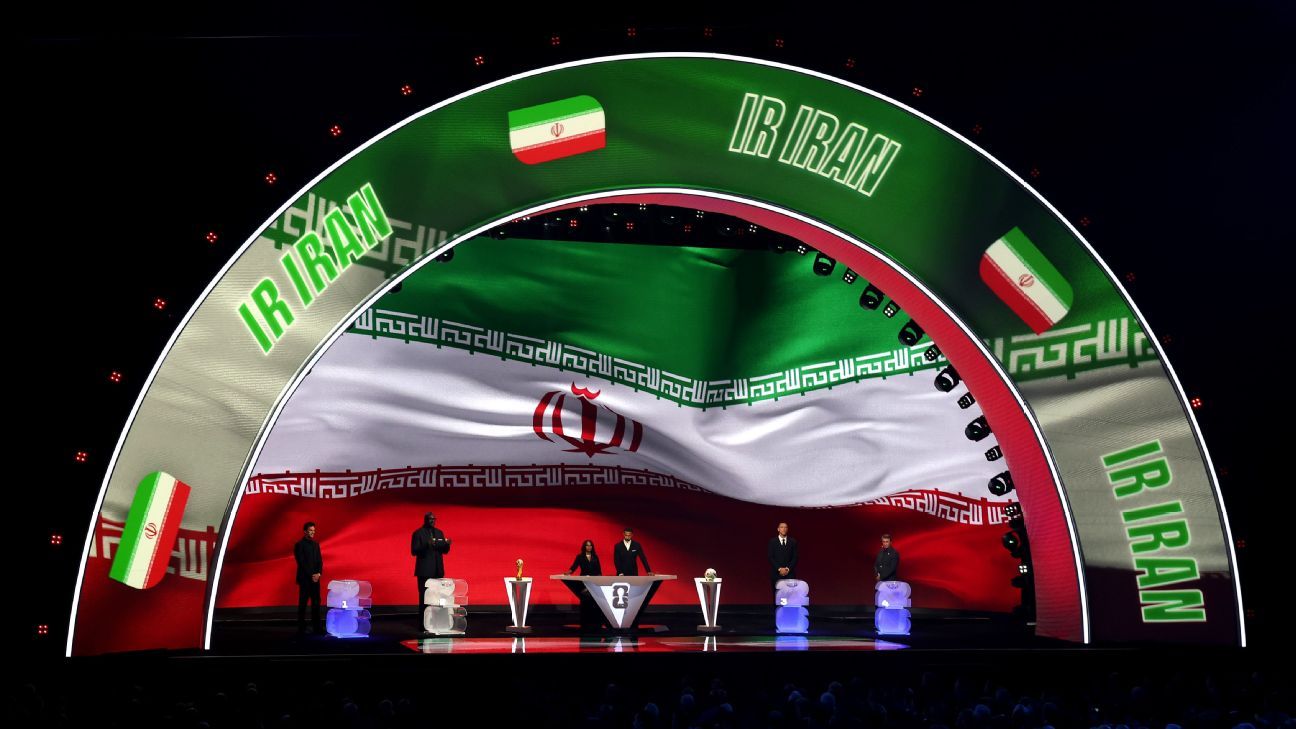
Why Iran's 2026 World Cup Spot Is in Serious Doubt Amid Conflict
The global spectacle of the FIFA World Cup 2026, set to be co-hosted by Canada, Mexico, and the United States, promises to be an event of unparalleled excitement and unity. However, for one of the qualifying nations, Iran, the path to North America is clouded by an ominous geopolitical storm. As the tournament draws nearer, with less than 100 days remaining before the kick-off, the question of "will iran play world cup 2026" has escalated from a speculative query to a deeply concerning dilemma, threatening to overshadow the sporting spirit with stark political realities.
Recent escalations in the Middle East, marked by intense conflict involving one of the host nations, have thrown Iran's participation into serious jeopardy. This unprecedented situation pits the aspirational spirit of global football against the harsh realities of international diplomacy and regional instability, leaving officials from football federations and FIFA grappling with a crisis that defies conventional sporting resolutions.
The Escalating Crisis: Why Iran's World Cup Bid is Under Threat
The profound doubt surrounding Iran's 2026 World Cup spot stems directly from a dramatic intensification of conflict in the Middle East. Reports indicate that the United States and Israel launched significant attacks on Iran, which tragically resulted in over a thousand fatalities, including Iran's Supreme Leader Ali Khamenei. This devastating blow quickly triggered a retaliatory response from Tehran, involving waves of missiles and drones targeting Israel and US military installations across the region. The conflict rapidly expanded, impacting at least 12 countries and igniting widespread concern across the globe.
In the wake of these hostilities, the feasibility of Iran's participation in a tournament hosted, in part, by the United States has come under intense scrutiny. The sentiment within Iran’s football leadership reflects this grim reality. Mehdi Taj, president of the Football Federation of the Islamic Republic of Iran (FFIRI), expressed the widespread despair, telling local sports portal Varzesh3 that "After this attack, we cannot be expected to look forward to the World Cup with hope." This statement encapsulates the immense pressure and emotional toll the conflict has taken on the nation's sporting aspirations.
Adding another layer of complexity, former US President Donald Trump, weighing in on the issue, stated his indifference regarding Iran's participation. He was quoted by Politico describing Iran as "a very badly defeated country... running on fumes." Such strong rhetoric from a prominent American political figure underscores the deep-seated animosity and raises significant questions about the political will to facilitate Iran's entry into a host nation that considers it an adversary. The convergence of military action, high-level casualties, and stark political statements makes it abundantly clear why the possibility of "iran play world cup 2026" is now fraught with uncertainty.
Navigating the Uncharted Waters: FIFA and Host Nation Stance
The intersection of sport and geopolitics has always been delicate, but the current scenario involving Iran and the 2026 World Cup plunges FIFA into truly uncharted territory. The global football governing body, traditionally a proponent of unity through sport, finds itself in an unenviable position. FIFA President Gianni Infantino, while acknowledging the gravity of the situation, offered a hopeful yet cautious stance. Speaking to Sky News' Rob Harris, Infantino expressed, "I hope so much, it will be a moment of peace. I hope we can contribute to unite the world a little bit. The world really needs it." This aspirational sentiment, however, offers little concrete guidance for the immediate challenge.
Similarly, FIFA General Secretary Mattias Grafstrom adopted a noncommittal approach, stating it was "premature to comment on it in detail," while assuring that FIFA would "monitor the developments around all issues around the world." While these statements reflect FIFA's desire for a peaceful resolution and a complete tournament, they highlight the lack of a clear contingency plan for a conflict of this magnitude directly impacting a participant and a host.
Experts in sports and geopolitics paint a starker picture. Simon Chadwick, a professor of Afro-Eurasian sport at the Emlyon Business School in Shanghai, believes Iran’s participation is in "serious doubt." He specifically points to the formidable challenge of the United States, as a co-host and party to the conflict, allowing Iranian players, backroom staff, and officials to enter the country. "The US will not be keen to admit [Iranian] players, officials or medics – who normally travel alongside teams to tournaments," Chadwick noted, adding, "Given that they [Iran] are going to have to play their games in the US, I find it unlikely that they will be there."
This logistical and diplomatic quagmire presents an unprecedented hurdle. The US government's authority over visa issuance and national security concerns takes precedence, making the prospect of a team from a currently adversarial nation playing on its soil incredibly complex. The question for many thus becomes:
Will Iran Play World Cup 2026? Conflict Puts Participation in Doubt and what precedent might this set for the principle of sport as a unifying force?
The Logistical and Diplomatic Minefield for Iran's World Cup Spot
Beyond the high-level political statements, the practicalities of Iran's 2026 World Cup participation present a daunting array of challenges that border on insurmountable given the current climate. The primary hurdle remains the granting of entry visas by the United States. In a climate of heightened security concerns and direct military confrontation, the US Department of State and Homeland Security would face immense pressure regarding the admission of a delegation from Iran. This extends not just to players, but also to coaches, medical staff, support personnel, and even accredited journalists and fan groups.
The security implications alone are staggering. Ensuring the safety of the Iranian contingent, as well as the general public, in host cities would require extraordinary measures. This isn't just about preventing external threats, but also managing the potential for protests, demonstrations, or even internal dissent within the Iranian delegation, which could become a political spectacle in itself. The optics of Iranian officials and athletes walking onto American soil amidst such deep-seated animosity would be a constant source of tension.
For Iran, the decision to withdraw, while logistically simpler for the hosts, is far from straightforward. As Professor Chadwick noted, Iran would "think very long and hard before walking away." The World Cup is a stage of immense national pride, a culmination of years of effort, and a rare opportunity for global visibility. Forfeiting this spot would carry significant political, financial, and emotional costs. It could be seen as a concession, a weakening of resolve, or a severe blow to the morale of a nation. The economic implications, including potential loss of prize money, sponsorship opportunities, and tourism-related revenue, also factor into this complex equation.
The dilemma facing Iran's 2026 World Cup bid is a stark reminder of how deeply geopolitics can intertwine with international sport. The absence of a diplomatic solution that satisfies both national security concerns and sporting principles creates a scenario with no easy answers. This is not merely a question of qualification but of international relations on a global stage. The unique situation begs the question:
Iran's 2026 World Cup Dilemma: Can They Play in US Host Nation? and what recourse does FIFA have if they cannot?
Beyond the Pitch: Broader Implications and Potential Outcomes
The uncertainty surrounding whether Iran will play World Cup 2026 extends far beyond the immediate disappointment for players and fans. This situation holds significant implications for FIFA, the future of international sports, and the delicate balance between global unity and national sovereignty.
Should Iran be unable to participate, FIFA would face a critical decision regarding its replacement. While rules typically govern such scenarios (e.g., the next highest-ranked team from the same confederation, or a play-off), the political nature of this potential withdrawal could lead to unprecedented discussions. The very integrity of the tournament and FIFA's "unity through sport" mantra would be challenged. How FIFA navigates this crisis could set a powerful precedent for future international sporting events held amidst complex geopolitical landscapes.
Furthermore, the dilemma highlights the inherent vulnerability of major international events to global politics. While the World Cup aims to transcend differences, this episode demonstrates that it is not immune to them. It forces a reconsideration of host selection criteria, particularly when multiple nations with potentially conflicting geopolitical interests are involved. The notion of sportswashing – using sports to improve a nation's image – could also be re-evaluated against the backdrop of situations where sport is instead used as a tool of political exclusion or sanction.
The rapid approach of the tournament, less than 100 days away, intensifies the pressure for a swift resolution. Every passing day without clarity adds to the logistical nightmares for organizers, teams, and fans. The outcome will be watched closely by nations globally, not just for its sporting implications but for the broader message it sends about international cooperation and the role of global institutions in navigating conflicts.
Conclusion
The question of "will iran play world cup 2026" remains precariously balanced on a knife-edge, caught between the fervor of international football and the harsh realities of geopolitical conflict. With the tournament's start just around the corner, the diplomatic and logistical hurdles facing Iran's participation appear formidable, perhaps insurmountable. The statements from Iranian football officials, the US government, and even FIFA highlight an unprecedented scenario where the dream of competing on the world stage is overshadowed by regional strife.
As the world watches, the ultimate resolution will not only determine Iran's immediate fate in the tournament but also leave a lasting mark on the relationship between sport and international politics. Whether through a last-minute diplomatic breakthrough, a difficult withdrawal, or forced exclusion, the 2026 World Cup will undoubtedly be remembered as the tournament where the beautiful game came head-to-head with the complexities of global conflict, pushing the boundaries of what is possible when nations clash on and off the pitch.